
Ladder Cable Tray Maintenance Guide is written for buyers, engineers, contractors, and project managers who need to keep the system inspectable after installation. The article focuses on long industrial routes and heavy cable runs, with practical attention to ventilation, support span, and cable pulling space. Instead of giving a broad introduction, it explains how to turn site conditions into a clearer purchasing and installation plan.
A strong project starts before quotation. If the buyer only asks for a general product, the supplier may not know the route, load, exposure, or accessories required. This is why ladder cable tray should be discussed with drawings, cable information, and installation details.
Table of Contents
- Define the Search Intent and Project Need
- Review the Installation Environment
- Check Load, Layout, and Cable Access
- Compare Materials and Accessories
- Use the Checklist Before Ordering
- Avoid Common Project Mistakes
- Documentation and Export Notes
- Conclusion
Define the Search Intent and Project Need
A practical ladder cable tray decision starts with the route, the cable list, and the real working environment.
The main question is not simply what the product is. The better question is how the product will solve a real routing problem. A project may need cable protection, open ventilation, corrosion resistance, easier inspection, clean panel entry, or a complete export package. Each need changes the way ladder cable tray should be specified.
Before the order is confirmed, the buyer should describe the site, the cable type, the cable quantity, and the route layout. This information helps the manufacturer understand whether the project needs ladder, perforated, trough, non-metallic, covered, or customized solutions.
Clear intent also prevents content and procurement from becoming too generic. When the team knows the problem being solved, ladder cable tray can be selected with a stronger link to the actual construction task.
Review the Installation Environment
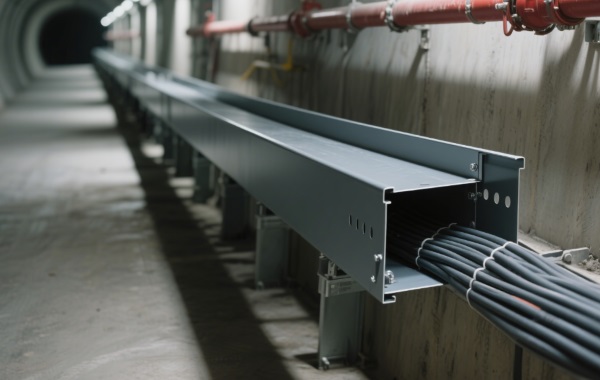
The best ladder cable tray choice is the one that supports installation, inspection, and future maintenance.
Environment is one of the most important selection factors. Indoor electrical rooms, outdoor pipe racks, coastal areas, chemical workshops, tunnels, rooftops, and control rooms do not create the same risk. Moisture, dust, salt, sunlight, vibration, and cleaning routines all influence ladder cable tray.
Buyers should state whether the route is exposed to rain, UV, chemical vapor, high humidity, mechanical impact, or frequent maintenance activity. Without this information, the supplier may recommend a product that is acceptable in general but not ideal for the actual site.
For background terminology, the IEC standards overview can help align project language. For product context, see the ladder tray guide.
Check Load, Layout, and Cable Access
| Review Point | Why It Matters | Action for Buyers |
|---|---|---|
| Project environment | Defines corrosion, dust, water, and access risk | Describe where the ladder cable tray will be installed |
| Cable load | Controls width, support spacing, and tray strength | Share cable list and expected spare capacity |
| Accessories | Prevents missing fittings during installation | Confirm bends, tees, reducers, covers, and fasteners |
| Documentation | Supports approval and export coordination | Request drawings, packing details, and material notes early |
For procurement teams, ladder cable tray should be reviewed as a technical requirement, not only as a line item.
Load review should include cable quantity, cable type, installed weight, future expansion, and route direction. A straight run may be easy to plan, while vertical sections, turns, tees, reducers, and equipment entries need more attention. Good ladder cable tray planning keeps the system workable after installation.
Access also matters. If workers cannot inspect joints, open covers, clean dust, or add cables later, maintenance becomes slow and expensive. The route should leave space for safe inspection and predictable cable management.
Future expansion should be discussed early. Many industrial projects add cables after commissioning. A reasonable spare capacity can make ladder cable tray more useful over the life of the project.
Compare Materials and Accessories

When engineers confirm ladder cable tray early, the supplier can recommend dimensions and accessories more responsibly.
Material choice should follow the working environment. Galvanized steel, FRP, polymer, stainless steel, and coated designs each have a role, but none should be selected by habit alone. The project team should compare corrosion risk, support strength, UV exposure, cover requirements, and accessory compatibility.
Accessories are often the difference between a smooth installation and a delayed one. Bends, tees, reducers, splice plates, covers, brackets, fasteners, and hold-down clamps should be included in the review. A complete ladder cable tray order is more than straight tray sections.
For broader technical or safety context, review Wikipedia cable tray overview. For related site guidance, the galvanized cable tray guide may help buyers compare route details.
Use the Checklist Before Ordering
A complete ladder cable tray inquiry reduces drawing changes, missing parts, and avoidable jobsite delays.
- Confirm the exact route where ladder cable tray will be installed.
- Share cable type, cable quantity, and cable load before quotation.
- Review width, height, support spacing, covers, fittings, and fasteners together.
- Check whether the environment requires corrosion-resistant or non-metallic materials.
- Ask for drawings, packing information, and accessory lists before production.
This checklist is simple, but it prevents many common mistakes. It also gives the supplier enough information to support a more reliable ladder cable tray recommendation.
Avoid Common Project Mistakes

A practical ladder cable tray decision starts with the route, the cable list, and the real working environment.
The first mistake is copying a previous specification without checking the new site. A solution that worked in a clean indoor room may not work in a dusty plant, coastal route, or outdoor installation. Every ladder cable tray decision should start with the current project.
The second mistake is forgetting accessories. If the buyer orders straight sections but not the necessary bends, reducers, covers, or connectors, the installation team may have to wait or improvise on site.
The third mistake is treating price as the only decision point. This article does not include prices because real cost depends on size, material, quantity, accessories, packaging, documents, and project requirements. A better comparison begins with complete specifications.
Documentation and Export Notes
The best ladder cable tray choice is the one that supports installation, inspection, and future maintenance.
Documentation is especially important for export projects. Buyers may need drawings, material descriptions, packing lists, inspection information, and installation notes. Asking for these documents after shipment can slow approval and create avoidable communication problems.
Packing should also match the order. Long sections, covers, and accessories need protection during handling and transport. Clear labeling helps the jobsite identify parts quickly, especially when the ladder cable tray order includes several sizes or customized fittings.
Good communication protects both buyer and supplier. When the project information is complete, ladder cable tray becomes easier to manufacture, inspect, pack, ship, and install.
Project teams should keep the discussion specific: route drawings, cable schedules, accessory lists, covers, support spacing, maintenance access, and packing requirements all affect the final result. When this information is reviewed before production, the system becomes easier to approve and easier to install.
A clear handover also helps the construction team. The installer should know where each straight section, bend, tee, reducer, cover, bracket, and fastener will be used before materials arrive at the site.
The purchasing team should compare quotations by scope instead of comparing a single product name. A complete scope includes material, dimensions, fittings, surface treatment, packing, documents, and delivery requirements.
Maintenance access should be visible in the drawings. If workers cannot reach a route safely, inspection and later cable additions become more difficult even when the original product is suitable.
Project teams should keep the discussion specific: route drawings, cable schedules, accessory lists, covers, support spacing, maintenance access, and packing requirements all affect the final result. When this information is reviewed before production, the system becomes easier to approve and easier to install.
A clear handover also helps the construction team. The installer should know where each straight section, bend, tee, reducer, cover, bracket, and fastener will be used before materials arrive at the site.
The purchasing team should compare quotations by scope instead of comparing a single product name. A complete scope includes material, dimensions, fittings, surface treatment, packing, documents, and delivery requirements.
Maintenance access should be visible in the drawings. If workers cannot reach a route safely, inspection and later cable additions become more difficult even when the original product is suitable.
Project teams should keep the discussion specific: route drawings, cable schedules, accessory lists, covers, support spacing, maintenance access, and packing requirements all affect the final result. When this information is reviewed before production, the system becomes easier to approve and easier to install.
A clear handover also helps the construction team. The installer should know where each straight section, bend, tee, reducer, cover, bracket, and fastener will be used before materials arrive at the site.
The purchasing team should compare quotations by scope instead of comparing a single product name. A complete scope includes material, dimensions, fittings, surface treatment, packing, documents, and delivery requirements.
Maintenance access should be visible in the drawings. If workers cannot reach a route safely, inspection and later cable additions become more difficult even when the original product is suitable.
Project teams should keep the discussion specific: route drawings, cable schedules, accessory lists, covers, support spacing, maintenance access, and packing requirements all affect the final result. When this information is reviewed before production, the system becomes easier to approve and easier to install.
A clear handover also helps the construction team. The installer should know where each straight section, bend, tee, reducer, cover, bracket, and fastener will be used before materials arrive at the site.
The purchasing team should compare quotations by scope instead of comparing a single product name. A complete scope includes material, dimensions, fittings, surface treatment, packing, documents, and delivery requirements.
Maintenance access should be visible in the drawings. If workers cannot reach a route safely, inspection and later cable additions become more difficult even when the original product is suitable.
Project teams should keep the discussion specific: route drawings, cable schedules, accessory lists, covers, support spacing, maintenance access, and packing requirements all affect the final result. When this information is reviewed before production, the system becomes easier to approve and easier to install.
A clear handover also helps the construction team. The installer should know where each straight section, bend, tee, reducer, cover, bracket, and fastener will be used before materials arrive at the site.
The purchasing team should compare quotations by scope instead of comparing a single product name. A complete scope includes material, dimensions, fittings, surface treatment, packing, documents, and delivery requirements.
Maintenance access should be visible in the drawings. If workers cannot reach a route safely, inspection and later cable additions become more difficult even when the original product is suitable.
Project teams should keep the discussion specific: route drawings, cable schedules, accessory lists, covers, support spacing, maintenance access, and packing requirements all affect the final result. When this information is reviewed before production, the system becomes easier to approve and easier to install.
A clear handover also helps the construction team. The installer should know where each straight section, bend, tee, reducer, cover, bracket, and fastener will be used before materials arrive at the site.
The purchasing team should compare quotations by scope instead of comparing a single product name. A complete scope includes material, dimensions, fittings, surface treatment, packing, documents, and delivery requirements.
Maintenance access should be visible in the drawings. If workers cannot reach a route safely, inspection and later cable additions become more difficult even when the original product is suitable.
Project teams should keep the discussion specific: route drawings, cable schedules, accessory lists, covers, support spacing, maintenance access, and packing requirements all affect the final result. When this information is reviewed before production, the system becomes easier to approve and easier to install.
A clear handover also helps the construction team. The installer should know where each straight section, bend, tee, reducer, cover, bracket, and fastener will be used before materials arrive at the site.
The best ladder cable tray choice is the one that supports installation, inspection, and future maintenance.
For procurement teams, ladder cable tray should be reviewed as a technical requirement, not only as a line item.
When engineers confirm ladder cable tray early, the supplier can recommend dimensions and accessories more responsibly.
A complete ladder cable tray inquiry reduces drawing changes, missing parts, and avoidable jobsite delays.
A practical ladder cable tray decision starts with the route, the cable list, and the real working environment.
The best ladder cable tray choice is the one that supports installation, inspection, and future maintenance.
For procurement teams, ladder cable tray should be reviewed as a technical requirement, not only as a line item.
When engineers confirm ladder cable tray early, the supplier can recommend dimensions and accessories more responsibly.
A complete ladder cable tray inquiry reduces drawing changes, missing parts, and avoidable jobsite delays.
A practical ladder cable tray decision starts with the route, the cable list, and the real working environment.
The best ladder cable tray choice is the one that supports installation, inspection, and future maintenance.
For procurement teams, ladder cable tray should be reviewed as a technical requirement, not only as a line item.
Conclusion
For procurement teams, ladder cable tray should be reviewed as a technical requirement, not only as a line item.
The right ladder cable tray choice connects engineering needs with procurement discipline. Buyers should not rely on vague descriptions or copied specifications. They should define the route, environment, load, accessories, documentation, and maintenance expectations before ordering.
If you are preparing a new project, share drawings, cable lists, installation conditions, and document requirements with Yidian Cable Tray. The team can help review the practical details and make the ladder cable tray inquiry clearer before production.
