Table of Contents
Introduction
Tray type fiberglass cable trays are one of the most practical and widely adopted cable management systems in modern electrical infrastructure. Characterized by their open structure, these trays are designed to support cables while allowing maximum airflow, easy inspection, and flexible installation.
Unlike enclosed systems, tray type FRP cable trays prioritize accessibility and heat dissipation. This makes them particularly suitable for environments where cables generate heat or require frequent maintenance. Constructed from fiberglass reinforced plastic (FRP), these trays provide excellent corrosion resistance, lightweight handling, and long-term durability even in harsh industrial or outdoor conditions.
As industries increasingly shift toward non-metallic cable management systems, tray type fiberglass cable trays are becoming a preferred solution in commercial buildings, renewable energy projects, and infrastructure developments.
What Is a Tray Type Fiberglass Cable Tray
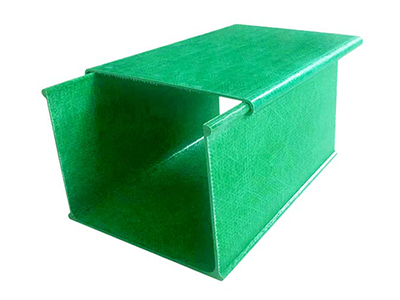
A tray type fiberglass cable tray is an open-style cable support system made from FRP materials. It typically features either a solid bottom or a perforated base, allowing cables to be laid directly within the tray without full enclosure.
The open design improves ventilation and simplifies cable routing, making it ideal for applications where cable heat dissipation and accessibility are critical.
Compared to trough or trapezoidal cable trays, tray type systems are more flexible and cost-effective, especially for light to medium load conditions.
Key Advantages
Tray type fiberglass cable trays offer a balanced combination of performance, cost-efficiency, and installation convenience.
| Advantage | Description |
|---|---|
| Excellent Ventilation | Open structure reduces heat buildup and improves cable lifespan |
| Lightweight Structure | Easy to transport and install, reducing labor costs |
| Corrosion Resistance | Suitable for humid, outdoor, and chemical environments |
| Easy Maintenance | Open access allows quick inspection and cable modifications |
| Flexible Installation | Works well in complex layouts and multi-level systems |
| Cost Efficiency | Lower installation and lifecycle costs compared to metal trays |
| Electrical Safety | Non-conductive material reduces risk of electrical hazards |
Technical Specifications and Design Considerations
Tray type fiberglass cable trays are manufactured in a wide range of configurations to meet project-specific requirements.
| Parameter | Typical Range | Unit |
|---|---|---|
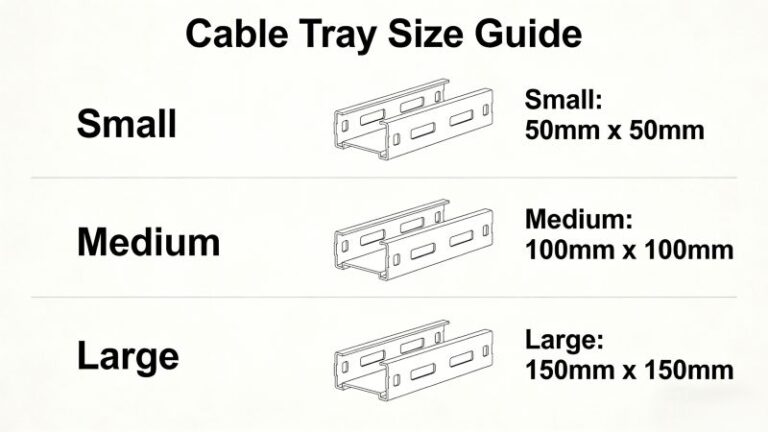
| Tray Width | 100–800 | mm |
| Tray Depth | 50–100 | mm |
| Maximum Load | 200–800 | kg/m |
| Material | Fiberglass Reinforced Plastic (FRP) | – |
| Temperature Range | -40 to 120 | °C |
| UV Resistance | Yes | – |
| Fire Retardancy | Optional | – |
| Surface Type | Perforated / Solid | – |
When selecting a tray, engineers must consider not only dimensions but also load distribution, support spacing, and environmental exposure.
Load Capacity Considerations
Load capacity depends on multiple factors:
- Tray width and thickness
- Support spacing
- Cable weight distribution
- Environmental conditions
Uniformly distributed loads are easier to manage, while concentrated loads require additional support.
Ventilation vs Protection
One of the main trade-offs in tray type systems is between airflow and protection:
- Perforated trays provide excellent airflow and are ideal for power cables
- Solid trays offer slightly better protection but reduce ventilation
Choosing the right configuration depends on the application environment.
Applications
Tray type fiberglass cable trays are widely used in projects where accessibility and airflow are priorities.
| Application | Description |
|---|---|
| Commercial Buildings | Offices, malls, hospitals with structured cabling systems |
| Data Centers | Supports airflow to prevent overheating |
| Renewable Energy | Solar farms and wind power installations |
| Infrastructure Projects | Railways, tunnels, bridges |
| Light Industrial Use | Factories with moderate cable loads |
| Outdoor Installations | UV-resistant and weatherproof performance |
In data centers, for example, tray type systems allow technicians to quickly add or replace cables without dismantling the structure, significantly improving operational efficiency.
Installation Best Practices
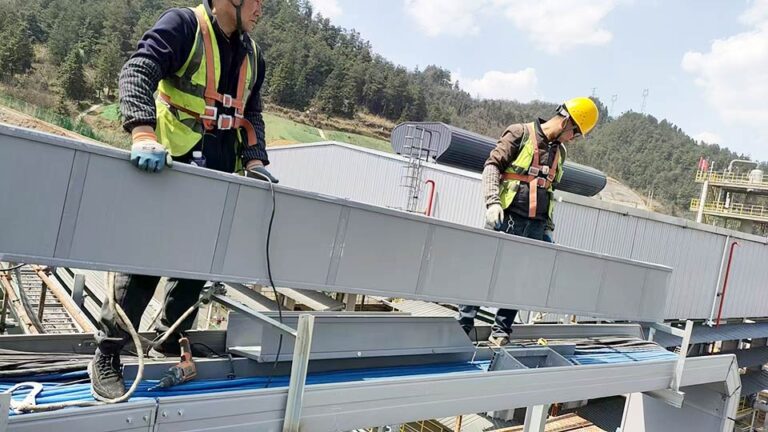
Proper installation is essential to ensure performance and long-term reliability.
Step 1: Planning and Layout
Define cable routes, load requirements, and future expansion capacity. Ensure adequate spacing between trays for airflow and maintenance access.
Step 2: Support System Setup
Install brackets or supports at appropriate intervals based on load calculations. Overly large spans can lead to sagging or structural deformation.
Step 3: Tray Installation
Align trays carefully and secure them using FRP-compatible fasteners. Ensure all connections are smooth to avoid cable damage.
Step 4: Cable Placement
Distribute cables evenly across the tray to prevent concentrated loads. Use cable ties or separators when necessary.
Step 5: Expansion Consideration
Leave space for future cable additions. Overfilling trays reduces airflow and increases risk of overheating.
Step 6: Safety Compliance
Ensure installation meets relevant standards such as IEC 61537 and local electrical codes.

Maintenance and Lifecycle Management
Tray type fiberglass cable trays require minimal maintenance, but regular inspection ensures optimal performance.
- Clean trays periodically to remove dust and debris
- Inspect for cracks, deformation, or loose connections
- Check cable organization and spacing
- Monitor environmental factors such as UV exposure or chemical contact
| Maintenance Task | Frequency |
|---|---|
| Visual Inspection | Quarterly |
| Cleaning | Semi-Annually |
| Load Review | Annually |
| Structural Check | Every 2 years |
Because FRP does not rust or corrode like steel, maintenance costs are significantly lower over the system’s lifetime.
Common Challenges and Solutions
Challenge: Cable overheating
Solution: Use perforated trays and avoid overcrowding
Challenge: Disorganized cables
Solution: Implement cable management planning and labeling
Challenge: Environmental exposure
Solution: Choose UV-resistant and chemically stable FRP materials
Challenge: Limited load capacity
Solution: Increase tray width or reduce support spacing
Comparison with Other Cable Tray Types
| Feature | Tray Type FRP | Trapezoidal FRP | Trough FRP |
|---|---|---|---|
| Load Capacity | Medium | High | Medium |
| Ventilation | Excellent | Moderate | Low |
| Cable Protection | Moderate | Moderate | High |
| Installation Flexibility | High | Medium | Medium |
| Maintenance Ease | Easy | Moderate | Moderate |
| Best Use Case | General applications | Heavy-duty systems | Protective environments |
Tray type systems stand out for their flexibility and ventilation, making them the preferred choice for general cable management scenarios.
How to Choose the Right Tray Type FRP Cable Tray
When selecting a tray, consider the following:
- Cable type and total weight
- Required ventilation level
- Environmental conditions
- Installation complexity
- Budget constraints
For example:
- Choose perforated trays for heat-sensitive cables
- Use wider trays for future expansion
- Select higher-grade FRP for corrosive environments
FAQ
Q1: What is the main advantage of tray type fiberglass cable trays?
They provide excellent ventilation and easy access, making cable maintenance and heat dissipation much more efficient.
Q2: When should I choose tray type instead of trough type?
Tray type is better when airflow and accessibility are more important than full protection.
Q3: Are tray type FRP cable trays suitable for outdoor use?
Yes, they are UV-resistant and perform well in outdoor environments.
Q4: How much load can a tray type FRP cable tray support?
Typically between 200–800 kg/m, depending on design and support spacing.
Q5: Do tray type FRP cable trays require frequent maintenance?
No, they require minimal maintenance due to their corrosion resistance and durable structure.