Table of Contents
Introduction
Heavy duty tray cable trays are designed for industrial and large-scale infrastructure projects where high load-bearing capacity, durability, and long-term reliability are essential. Unlike standard tray type cable trays, heavy duty versions are engineered to support large power cables, control lines, and instrumentation wiring in demanding environments such as factories, power plants, refineries, and offshore facilities. Choosing the right heavy duty tray cable tray ensures operational safety, reduces maintenance costs, and facilitates future expansion for high-density cable systems.
Structural Features
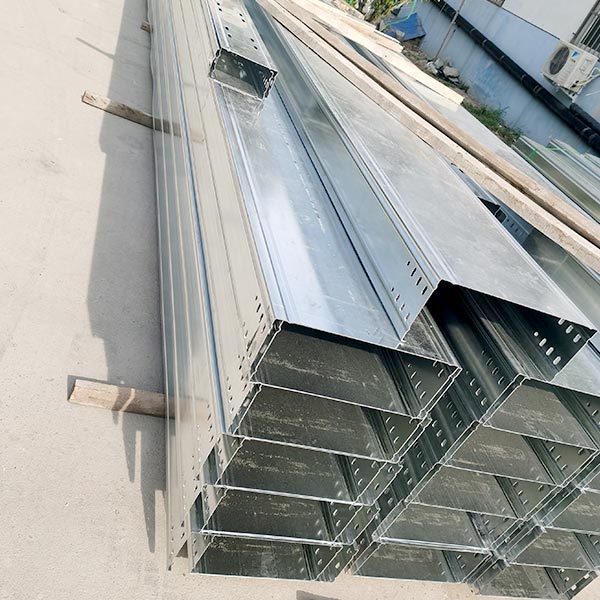
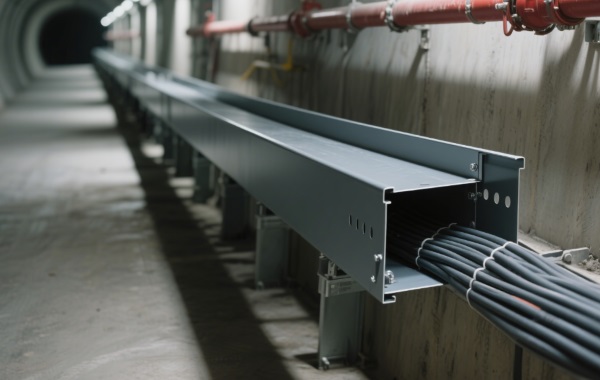
Heavy duty tray cable trays typically feature reinforced side rails, thicker steel gauge, and optional covers for mechanical protection. They are available in solid bottom or perforated designs to meet both strength and ventilation requirements. Key features include high tensile steel for maximum load capacity, reinforced side rails to prevent deformation, continuous support for heavy and multi-layer cable installations, corrosion-resistant finishes for harsh environments, and compatibility with a wide range of accessories including elbows, tees, reducers, and covers. These features make heavy duty trays suitable for environments where cables are exposed to vibration, high temperature, or mechanical stress.

Material Options
Heavy duty tray cable trays are manufactured using high-quality materials to ensure longevity. Hot-dip galvanized steel is suitable for outdoor industrial applications and humid environments. Stainless steel is recommended for chemical plants, coastal areas, and marine installations. Powder-coated steel is ideal for aesthetic indoor applications with corrosion resistance. Selecting the right material depends on environmental exposure, cable load, and project requirements.
Load Capacity and Dimensions
The load capacity of a heavy duty tray cable tray depends on tray width, side rail height, material thickness, and support span. Below is a typical specification reference:
| Parameter | Typical Range |
|---|---|
| Width | 150 mm – 1200 mm |
| Side Rail Height | 100 mm – 200 mm |
| Steel Thickness | 2.0 mm – 4.0 mm |
| Length per Section | 2 m / 3 m |
| Surface Treatment | Hot-Dip Galvanized / Stainless Steel / Powder-Coated |
| Maximum Load Capacity | 100 – 500 kg/m (depending on span and gauge) |
| Installation Type | Ceiling, wall, floor, or vertical risers |
Engineers should calculate cable weight per meter and select tray size and support spacing accordingly.
Applications of Heavy Duty Tray Cable Tray
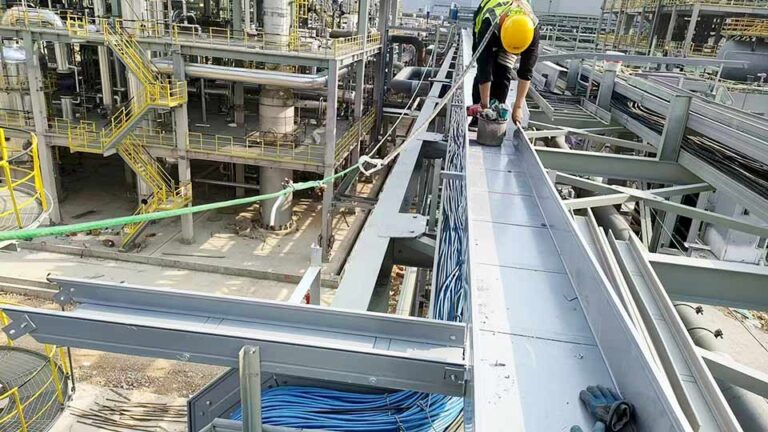
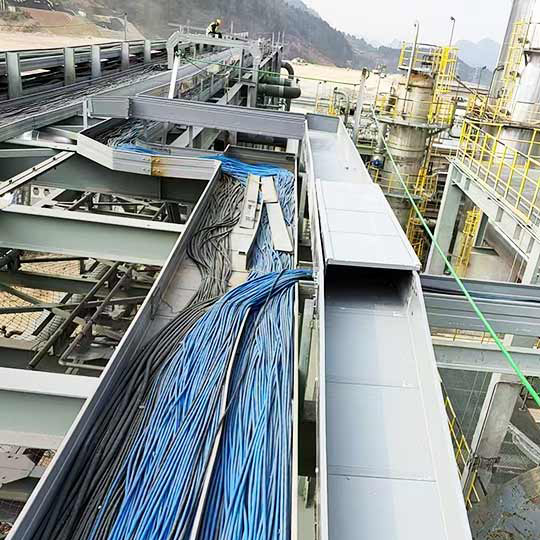
Heavy duty trays are commonly used in industrial manufacturing plants for high-voltage and control cables, in power generation facilities and substations, in refineries, chemical plants, and offshore platforms, in data centers with high-density cabling requirements, and in large commercial and transportation infrastructure. These trays ensure mechanical protection, safety compliance, and easier maintenance even in the harshest conditions.
Installation and Maintenance
Proper installation is crucial for maximizing load capacity and longevity. Support spacing must match engineering guidelines. Use compatible accessories for bends, tees, and covers. Ensure proper grounding and bonding. Inspect periodically for corrosion, mechanical damage, and loose fasteners. Routine inspection every 6–12 months ensures safety and prevents downtime.
Advantages Over Standard Cable Trays
Compared to standard tray type cable trays, heavy duty trays handle larger and heavier cable bundles. Reinforced construction prevents sagging and deformation. They are suitable for extreme environmental conditions and can be customized for non-standard widths, lengths, and accessories. This makes them ideal for projects requiring high reliability and long service life.
FAQ
1. What is a heavy duty tray cable tray?
It is a reinforced tray type cable tray designed to support large power cables and multi-layer installations in industrial environments.
2. Where are heavy duty trays commonly used?
They are used in power plants, industrial factories, offshore platforms, chemical plants, and large commercial or infrastructure projects.
3. How do I select the right material?
Choose based on environmental exposure: hot-dip galvanized for outdoors, stainless steel for corrosive environments, and powder-coated for aesthetic indoor use.
4. Can heavy duty trays be customized?
Yes. Most manufacturers offer custom widths, side rail heights, thicknesses, and accessories to fit project needs.
5. How often should they be inspected?
Inspections every 6–12 months are recommended to check for corrosion, mechanical damage, and loose fasteners.
6. What accessories are available?
Manufacturers provide elbows, tees, reducers, dividers, covers, and support brackets for flexible installation.
7. Can heavy duty trays be used outdoors?
Yes, with hot-dip galvanized or stainless steel finishes, they are suitable for outdoor and humid environments.