Table of Contents
Introduction
Galvanized tray cable tray is one of the most widely used cable management solutions in industrial and commercial electrical installations. Designed to provide continuous cable support and strong mechanical protection, galvanized tray cable trays are particularly suitable for environments where corrosion resistance and long service life are required.
With a solid tray structure and protective galvanized coating, this cable tray system helps organize power cables, control wiring, and communication lines efficiently. It is commonly installed in manufacturing facilities, power plants, commercial buildings, and infrastructure projects.
Choosing the right galvanized tray cable tray ensures better cable protection, safer installation, and reduced maintenance over the life of the electrical system.
What Is a Galvanized Tray Cable Tray
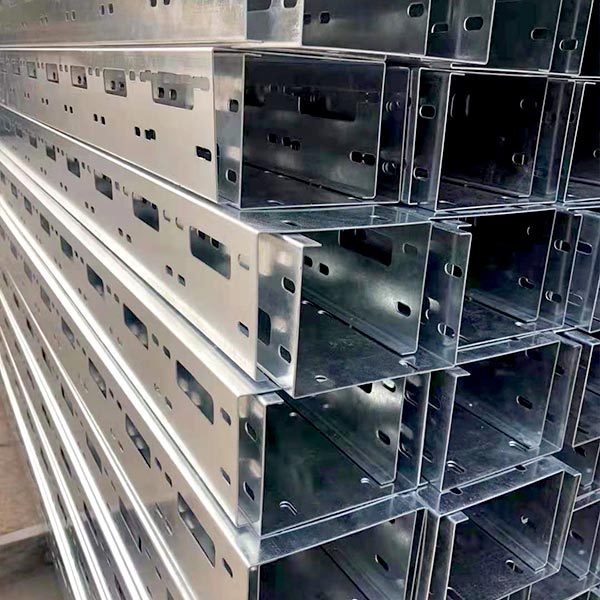
A galvanized tray cable tray is a solid-bottom cable support system made from steel that has been coated with zinc through galvanization. This coating protects the steel from corrosion and environmental damage.
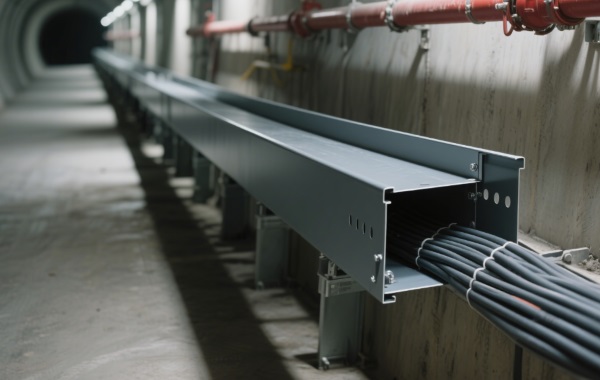
The tray design provides continuous support along the entire cable path, preventing cables from sagging and reducing the risk of mechanical damage. Compared with ladder cable trays, tray type systems offer better cable containment, making them ideal for installations with smaller cables or multi-layer cable arrangements.
The galvanized coating significantly improves durability, allowing the cable tray to perform reliably in humid, industrial, or outdoor environments.
Types of Galvanized Coating
There are different galvanizing methods used in the manufacturing of tray cable trays. Each method provides different levels of corrosion resistance.
Pre-galvanized steel is produced by coating steel sheets with zinc before the tray is formed. This method is commonly used for indoor installations where environmental exposure is limited.
Hot-dip galvanized cable trays are coated after fabrication by immersing the tray in molten zinc. This process creates a thicker protective layer and provides superior corrosion resistance for outdoor and industrial environments.
Selecting the correct galvanizing method depends on installation conditions, project lifespan, and environmental exposure.
Standard Specifications
The specifications of galvanized tray cable trays may vary depending on project requirements. The table below shows typical product parameters.
| Specification Item | Typical Range |
|---|---|
| Tray Width | 100 mm – 1000 mm |
| Side Rail Height | 50 mm – 150 mm |
| Steel Thickness | 1.2 mm – 2.5 mm |
| Tray Length | 2 m / 2.5 m / 3 m |
| Surface Treatment | Pre-Galvanized / Hot-Dip Galvanized |
| Load Capacity | Medium to Heavy Duty |
| Installation Type | Ceiling / Wall / Floor Support |
These specifications can be customized according to engineering requirements and cable load conditions.
Advantages of Galvanized Tray Cable Tray
One of the main advantages of galvanized tray cable trays is corrosion resistance. The zinc coating acts as a protective barrier against moisture, chemicals, and environmental exposure.
Another key benefit is structural strength. Steel tray construction provides strong support for large cable bundles and heavy electrical systems.
Galvanized trays also offer long service life. The protective coating reduces rust and degradation, allowing the system to perform reliably for many years with minimal maintenance.
Installation efficiency is another advantage. Tray cable systems allow easy cable routing, expansion, and maintenance compared with traditional conduit systems.
These advantages make galvanized tray cable trays a preferred choice for many electrical engineers and contractors.
Common Applications
Galvanized tray cable trays are used in a wide range of industries.
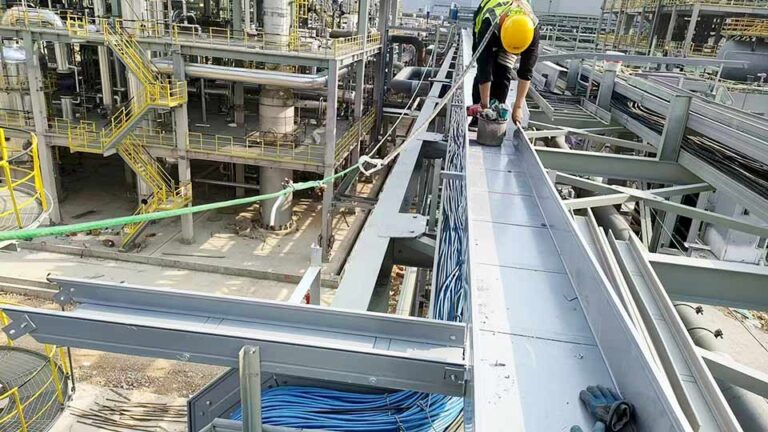
Industrial manufacturing plants use them to support power distribution cables and automation wiring. Commercial buildings rely on tray cable systems for organized electrical distribution and communication networks. Power generation facilities and substations require durable cable support systems capable of handling heavy loads.
Infrastructure projects such as airports, transportation hubs, and large construction developments also depend on galvanized tray cable trays to maintain safe and organized cable management systems.
Because of their durability and flexibility, these trays are suitable for both indoor and outdoor installations.


Installation Considerations
Proper installation ensures safe and efficient cable tray performance. Support brackets should be installed at appropriate intervals to prevent tray deflection. Cable loads must be calculated to determine suitable tray width and thickness.
Grounding and bonding are also important safety requirements in electrical installations. When trays are installed in outdoor environments, protective covers may be added to prevent debris accumulation or environmental damage.
Professional installation and adherence to engineering guidelines help ensure long-term system reliability.
Maintenance and Service Life
Galvanized tray cable trays require minimal maintenance compared with other cable management systems. However, periodic inspections are recommended to check for loose fasteners, physical damage, or corrosion in extremely harsh environments.
Cleaning debris and maintaining proper cable organization also improves airflow and system safety. When installed correctly, galvanized tray cable trays can operate effectively for decades.
FAQ
What is a galvanized tray cable tray?
A galvanized tray cable tray is a steel cable support system with a zinc coating that protects the tray from corrosion and environmental damage.
Where are galvanized tray cable trays commonly used?
They are widely used in industrial plants, commercial buildings, power stations, infrastructure projects, and other large electrical installations.
What is the difference between pre-galvanized and hot-dip galvanized trays?
Pre-galvanized trays are coated before fabrication and are typically used indoors, while hot-dip galvanized trays are coated after fabrication and provide stronger corrosion resistance for outdoor environments.
Can galvanized tray cable trays be customized?
Yes. Manufacturers can produce different widths, thicknesses, and accessories according to project specifications.
How long do galvanized cable trays last?
Depending on environmental conditions and coating type, galvanized trays can last several decades with proper installation and maintenance.
Are galvanized tray cable trays suitable for outdoor use?
Yes. Hot-dip galvanized trays are specifically designed to withstand outdoor environments and high humidity.