Table of Contents
Introduction
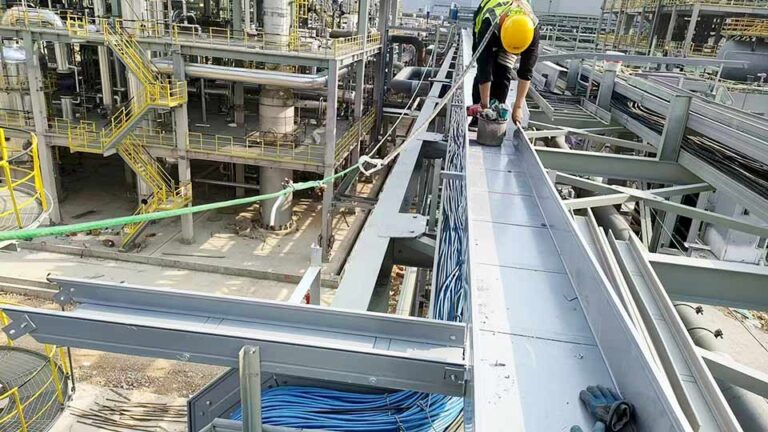
Galvanized cable tray systems are widely used in industrial, commercial, and outdoor installations due to their durability, corrosion resistance, and cost-effectiveness. These systems provide structured pathways for power, control, and data cables, ensuring safety, organization, and compliance with electrical standards. Galvanized trays are ideal for facilities where long-term performance and moderate environmental protection are required.
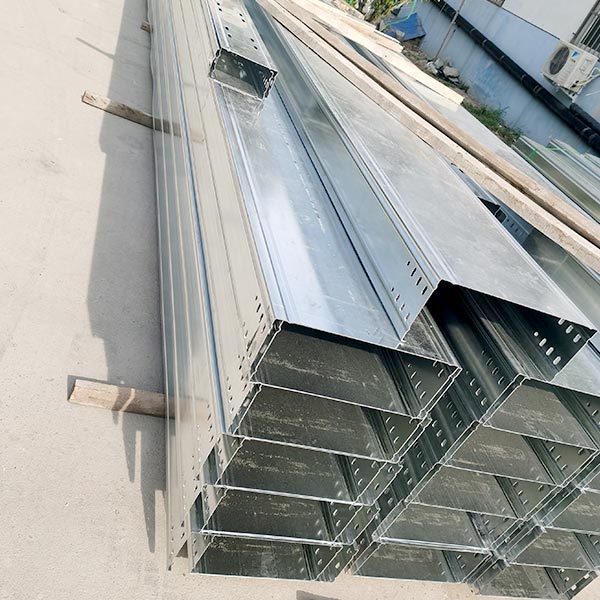
Galvanized cable trays are made by applying a zinc coating to steel, which prevents rust and extends tray life. They are suitable for indoor and outdoor use, including industrial plants, commercial buildings, and utility projects.
Benefits of Galvanized Cable Tray Systems
- Corrosion Resistance: Zinc coating protects against rust and oxidation.
- Durability: Strong construction supports medium to heavy cable loads.
- Cost-Effective: More affordable than stainless steel while maintaining long service life.
- Safety: Organized routing reduces fire hazards, mechanical damage, and maintenance issues.
- Easy Installation: Pre-fabricated trays simplify assembly and expansion.
Types of Galvanized Cable Tray Systems
Ladder Cable Tray
Open design provides excellent support for high-current power cables while allowing ventilation to prevent overheating.
Perforated Cable Tray
Supports medium-weight cables and allows airflow, minimizing heat accumulation and maintaining cable longevity.
Solid-Bottom Cable Tray
Offers protection for sensitive low-voltage cables from dust, debris, and mechanical damage.
Modular Galvanized Systems
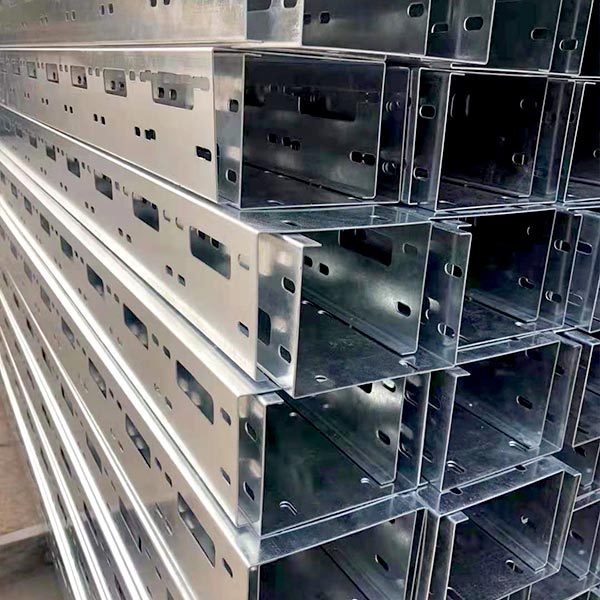
Modular components allow flexible layouts, easy expansion, and quick installation, making them ideal for complex projects.
Material Comparison and Specifications
| Material | Corrosion Resistance | Load Capacity | Weight | Best Applications |
|---|---|---|---|---|
| Galvanized Steel | Medium | Medium-High | Medium | Industrial and commercial indoor/outdoor projects |
| Stainless Steel | High | High | Medium | Coastal, chemical, or highly corrosive environments |
| FRP | Excellent | Medium | Low | Humid or coastal environments |
| Polymer Composite | High | Medium | Low | Light-duty installations, flexible layouts |
Installation Guidelines
- Ensure brackets and fasteners are compatible with galvanized steel.
- Maintain proper support spacing to prevent sagging and cable strain.
- Separate power and data cables to reduce interference.
- Allow for thermal expansion in outdoor or high-temperature environments.
- Conduct periodic inspections for mechanical wear, corrosion, or loose fittings.
Applications of Galvanized Cable Tray Systems
- Industrial Facilities: Heavy machinery, power distribution, and control cables.
- Commercial Buildings: Lighting, network, and power cabling organization.
- Utility Projects: Electrical distribution for public infrastructure.
- Outdoor Installations: Moderate environmental exposure, such as rooftops and utility corridors.
- Data Centers: Structured cabling for medium-load network and power cables.
Choosing the Right Galvanized Cable Tray System
- Load Requirements: Calculate total cable weight to select the appropriate tray type.
- Environmental Exposure: Suitable for both indoor and outdoor use under moderate corrosion conditions.
- Expansion Needs: Modular trays allow for future cable additions.
- Compliance: Ensure adherence to electrical, fire, and structural standards.
- Maintenance: Periodic inspection ensures long-term performance and safety.
FAQ
1. What is a galvanized cable tray system?
A steel cable tray coated with zinc to resist corrosion, providing durable cable support in industrial and commercial settings.
2. How long does a galvanized tray last?
Typically 10–20 years indoors, depending on environmental conditions.
3. Can galvanized trays be used outdoors?
Yes, they are suitable for moderate outdoor exposure, but not ideal for highly corrosive coastal or chemical environments.
4. Are galvanized trays suitable for heavy cables?
Yes, ladder or reinforced trays can support medium to heavy cable loads.
5. How often should galvanized trays be inspected?
Every 6–12 months for mechanical wear or corrosion, especially in outdoor environments.
Conclusion
Galvanized cable tray systems are a cost-effective, durable, and versatile solution for supporting power, control, and data cables in industrial, commercial, and outdoor projects. With proper installation and maintenance, they provide reliable cable management while minimizing costs and reducing the need for maintenance.
Call to Action
Need Help Choosing the Right Galvanized Cable Tray System?
If you’re unsure which galvanized cable tray fits your project, our experts are ready to help. Contact us today for a personalized consultation and ensure your cable management system is durable, organized, and cost-effective. Don’t wait—secure your cables and infrastructure now!