Table of Contents
Introduction
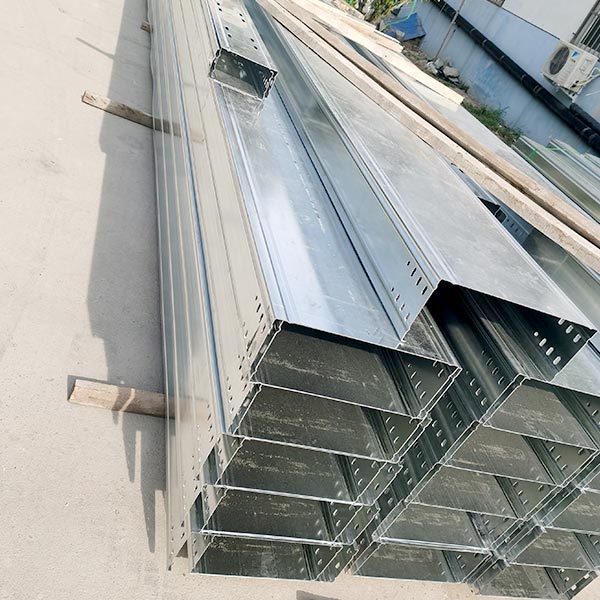
Galvanized cable tray solutions provide a reliable, cost-effective option for routing electrical cables in industrial, commercial, and outdoor applications. The galvanized coating protects steel trays from corrosion, ensuring long-term durability and structural integrity. With the growing need for organized, safe, and scalable cable systems, galvanized cable trays have become a standard choice for many facilities.
These trays support power, control, and data cables while minimizing maintenance, protecting against mechanical damage, and ensuring compliance with safety and fire regulations. Their versatility and affordability make them ideal for both new installations and retrofit projects.

Benefits of Galvanized Cable Tray Solutions
- Corrosion Resistance: Zinc coating protects the steel from rust and environmental exposure.
- Cost-Effective: Offers a durable solution at a lower cost than stainless steel.
- Durability: Handles heavy cable loads and industrial stress.
- Safety: Reduces fire risks and protects cables from mechanical damage.
- Easy Installation: Lightweight design allows for quick deployment and expansion.
Types of Galvanized Cable Trays
Ladder Cable Tray
Open ladder design allows proper ventilation and heat dissipation, making it suitable for high-power cables.
Perforated Cable Tray
Perforations improve airflow and prevent water accumulation while supporting moderate cable loads.
Solid-Bottom Cable Tray
Protects sensitive instrumentation and control cables from dust, moisture, and debris.
Channel Cable Tray
Compact design ideal for branch circuits, control panels, and tight installation spaces.
Material Comparison and Technical Specifications
Choosing the correct galvanized cable tray type and size ensures long-term performance. Below is a comparison table of common galvanized cable tray specifications:
| Tray Type | Load Capacity | Corrosion Resistance | Best Applications | Typical Widths (mm) | Typical Heights (mm) |
|---|---|---|---|---|---|
| Ladder | High | Medium | Power cables, heavy industrial loads | 100-600 | 50-150 |
| Perforated | Medium | Medium | Ventilated industrial or commercial spaces | 100-600 | 50-150 |
| Solid-Bottom | Medium | Medium | Sensitive instrumentation and control | 100-400 | 50-100 |
| Channel | Low | Medium | Branch circuits, tight installations | 50-200 | 40-100 |
Installation Guidelines
- Use galvanized or compatible clamps to prevent corrosion.
- Support spacing should match load and tray type recommendations.
- Segregate power and data/control cables to prevent interference.
- Allow for thermal expansion, especially in outdoor environments.
- Inspect trays regularly for damage, loose fasteners, or coating wear.
Applications of Galvanized Cable Tray Solutions
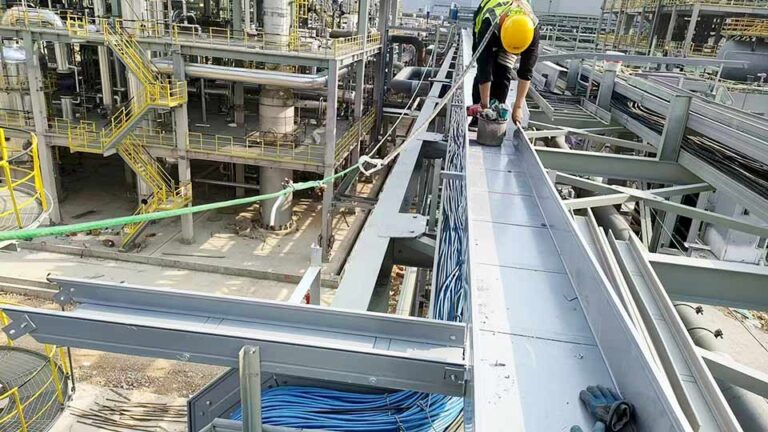
- Industrial Facilities: Heavy-duty trays for machinery and control systems.
- Commercial Buildings: Ventilated and solid trays for network and power cables.
- Outdoor Installations: Galvanized coating protects against rain, humidity, and moderate environmental exposure.
- Warehouses and Distribution Centers: Efficient routing of lighting, control, and network cables.
- Power Plants and Utilities: Reliable support for high-voltage and control cable systems.

How to Choose the Right Galvanized Cable Tray
- Load Requirements: Ladder trays for heavy power cables; perforated trays for lighter or ventilated needs.
- Environmental Exposure: Galvanized coating protects against indoor humidity and outdoor moderate exposure.
- Future Expansion: Modular systems allow for easy installation of additional cables.
- Compliance: Ensure tray type meets fire, load, and safety standards.
Conclusion
Galvanized cable tray solutions offer a durable, cost-effective, and versatile option for industrial, commercial, and outdoor cable management. By selecting the right type, size, and installation method, facilities can ensure reliable cable protection, reduced maintenance, and enhanced safety. Investing in galvanized cable trays supports long-term operational efficiency and protects critical electrical infrastructure.
FAQ
Can galvanized cable trays be used outdoors?
Yes, they are suitable for moderate outdoor exposure but may require additional coatings in highly corrosive environments.
How do galvanized trays compare to stainless steel trays?
Galvanized trays are cost-effective but offer lower corrosion resistance than stainless steel, which is better for harsh environments.
What types of cables are suitable for galvanized trays?
Power, instrumentation, control, and network cables can all be supported based on load capacity.
How often should galvanized cable trays be inspected?
Inspections every 6–12 months are recommended, especially in environments with moisture or mechanical stress.
Are galvanized cable trays easy to expand?
Yes, modular designs allow for straightforward installation of additional trays or cables.
Need Help Choosing the Right Galvanized Cable Tray?
If you’re unsure which galvanized cable tray fits your facility or project, our experts are ready to assist. Contact us today for a personalized consultation and ensure your electrical systems are organized, safe, and reliable. Don’t wait—upgrade your cable management system now!