Table of Contents
Introduction
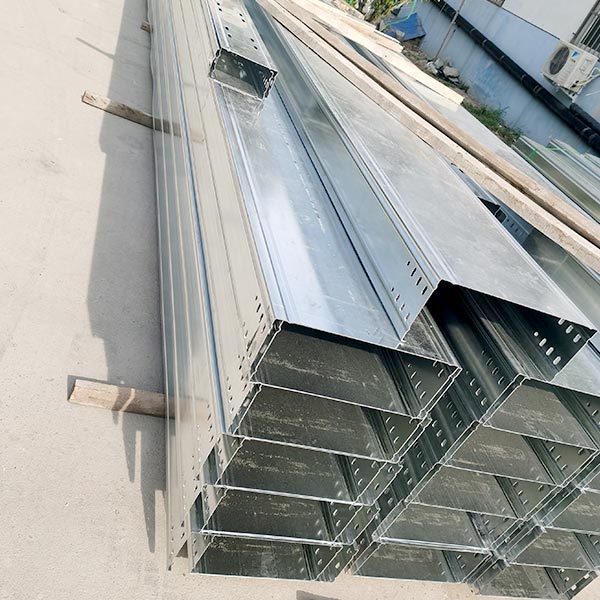
Electrical fires can cause devastating damage to industrial, commercial, and residential facilities. Choosing a fireproof cable tray solution is a critical step in safeguarding cables, equipment, and personnel. Fireproof cable trays are designed to resist high temperatures, prevent fire propagation, and maintain cable integrity during emergencies.
Modern fireproof cable trays are available in materials such as coated steel, stainless steel, and specialized fire-resistant composites. They not only improve safety but also comply with international fire and electrical standards, providing peace of mind for facility managers and engineers.

Why Fireproof Cable Trays Are Essential
- Prevent Fire Spread: Fireproof trays resist heat and contain flames, limiting damage.
- Protect Critical Systems: Maintain the integrity of power, data, and control cables during fire incidents.
- Regulatory Compliance: Meets fire safety codes and international standards for electrical installations.
- Durability: Resistant to corrosion, mechanical stress, and thermal expansion.
- Long-Term Safety: Reduces risk of downtime, property damage, and personnel injury.
Types of Fireproof Cable Tray Solutions
Ladder Fireproof Cable Tray
Offers ventilation while providing structural support for high-power cables. Ideal for industrial areas where heat dissipation is important.
Solid-Bottom Fireproof Cable Tray
Protects sensitive cables from fire, dust, and debris. Suitable for indoor installations where maximum protection is required.
Perforated Fireproof Cable Tray
Combines fire resistance with ventilation, reducing heat buildup and providing airflow for sensitive instrumentation cables.
Fire-Resistant Polymer Cable Tray
Lightweight and non-conductive, suitable for areas where corrosion, humidity, or weight reduction is a concern.
Material Comparison and Performance
Selecting the right fireproof cable tray material ensures both safety and operational efficiency. The table below compares common fireproof tray options:
| Material | Fire Resistance | Corrosion Resistance | Load Capacity | Best Applications |
|---|---|---|---|---|
| Stainless Steel | High | Excellent | High | Industrial, offshore, chemical plants |
| Galvanized Steel with Fireproof Coating | Medium-High | Medium | High | Commercial and light industrial |
| Fire-Resistant FRP | Medium | Excellent | Medium | Humid, corrosive, or lightweight applications |
| Solid Aluminum with Fire Coating | Medium | Medium | Medium | Indoor industrial, lightweight support |
Installation Guidelines
Proper installation ensures that fireproof cable trays provide optimal protection:
- Use compatible fire-resistant clamps and fasteners.
- Maintain correct support spacing to avoid tray deformation under high temperatures.
- Separate power and control/data cables to reduce heat transfer.
- Ensure trays are mounted away from combustible materials.
- Perform routine inspections to verify integrity and coating effectiveness.

Applications of Fireproof Cable Tray Solutions
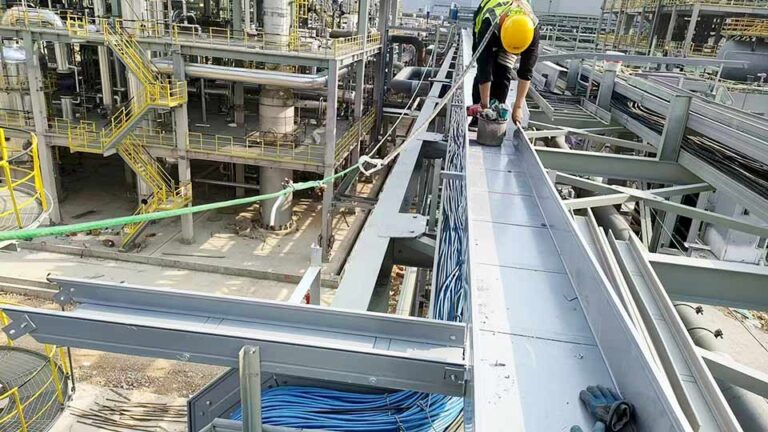
- Industrial Plants: Protect critical power and control systems from potential fire hazards.
- Commercial Buildings: Fireproof trays for electrical and data cable networks.
- Hospitals and Data Centers: Maintain operation during emergencies with fire-resistant systems.
- Chemical and Offshore Facilities: Resistant to fire, corrosion, and mechanical stress.
- High-Rise Buildings: Ensures cable safety in densely populated areas and reduces fire risks.
How to Choose the Right Fireproof Cable Tray
- Assess Environmental Conditions: Humidity, chemical exposure, and heat impact material choice.
- Determine Cable Type and Load: Heavy power cables require ladder or solid-bottom trays; control cables may use perforated trays.
- Check Regulatory Compliance: Ensure trays meet local and international fire and electrical standards.
- Plan for Expansion: Modular trays allow adding additional cables without compromising fire safety.
FAQ
1. What makes a cable tray fireproof?
Fireproof trays use materials or coatings that resist high temperatures and slow fire propagation.
2. Are fireproof trays suitable for outdoor use?
Yes, especially stainless steel or fire-resistant FRP trays with UV and corrosion protection.
3. How often should fireproof cable trays be inspected?
Routine inspections every 6–12 months are recommended, focusing on coating integrity and mechanical support.
4. Can fireproof trays support heavy industrial cables?
Yes, ladder and solid-bottom fireproof trays provide high load capacity for industrial applications.
5. Do fireproof trays reduce insurance risks?
Properly installed fireproof trays help meet safety regulations, potentially reducing insurance premiums and liabilities.
Conclusion
Fireproof cable trays are essential for protecting electrical systems from fire hazards, ensuring safety, and maintaining compliance with regulations. By selecting the appropriate type, material, and installation method, facilities can safeguard critical cables, reduce downtime, and enhance overall safety.
Call to Action
Need Help Choosing the Right Fireproof Cable Tray?
If you’re unsure which fireproof cable tray is best for your project, our experts are ready to guide you. Contact us today for a personalized consultation and ensure your electrical infrastructure is safe, compliant, and reliable. Don’t wait—protect your facility and personnel now!