Table of Contents
Introduction
Offshore projects, including oil platforms, wind farms, and marine research facilities, operate in some of the harshest environments on the planet. Saltwater, humidity, UV exposure, and continuous vibration can quickly degrade electrical systems if not properly protected. A reliable cable tray for offshore installations is essential to ensure safe, organized, and durable cable management.
Modern offshore cable trays are designed to withstand these challenges while supporting high loads, minimizing maintenance, and providing long-term reliability. Materials such as stainless steel 316L, FRP, and galvanized steel are commonly used depending on project requirements and environmental exposure.

Why Offshore Environments Need Specialized Cable Trays
Standard cable trays used on land cannot handle offshore conditions. The following challenges make specialized trays essential:
- Corrosion from Saltwater: Accelerates degradation of traditional metal trays.
- Mechanical Stress: Continuous vibrations from waves and machinery require strong structural support.
- Temperature and UV Exposure: Outdoor platforms are exposed to extreme sunlight and temperature changes.
- Fire Safety: High-risk industrial areas need fire-resistant materials.
Types of Cable Tray for Offshore Applications
Ladder Cable Tray
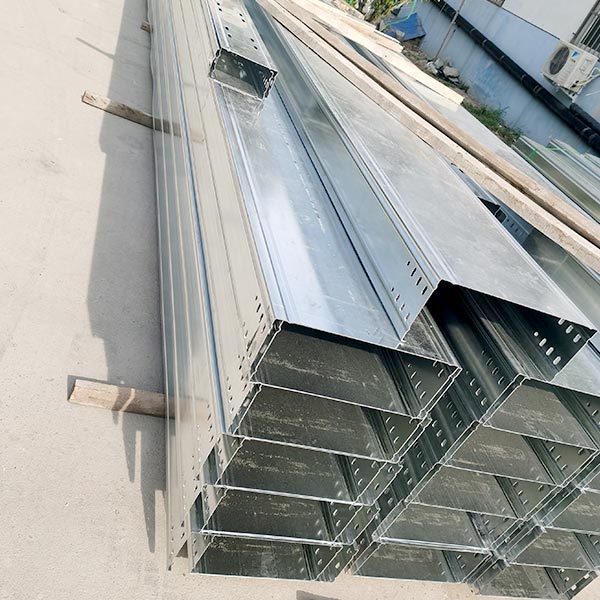
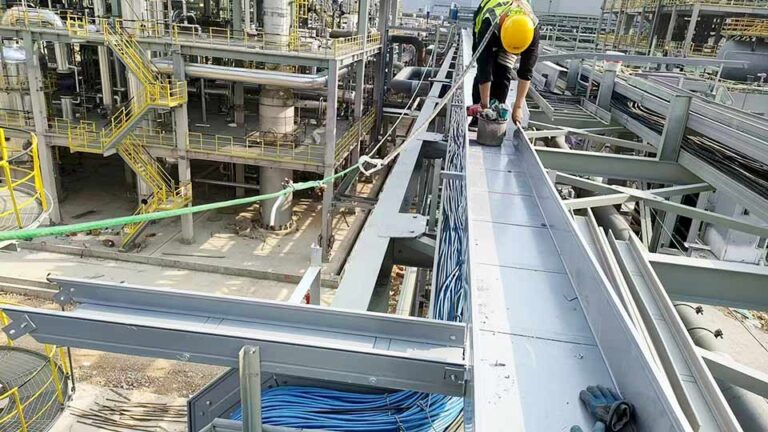
Ladder trays offer excellent ventilation and load capacity, making them suitable for high-power cables. Their open design prevents water accumulation and reduces heat buildup.
Trough Cable Tray
Trough cable trays protect cables from falling objects and harsh weather. Ideal for areas exposed to splash zones or moving equipment.
Solid-Bottom Cable Tray
Used in sensitive control rooms or areas where complete cable protection is required. Solid-bottom trays prevent dust, debris, and mechanical impact.
FRP and Stainless Steel Cable Trays
FRP trays are lightweight, corrosion-resistant, and non-conductive, making them suitable for highly corrosive environments. Stainless steel 316L trays provide exceptional durability and corrosion resistance, particularly in saltwater exposure zones.
Material Comparison and Performance
Selecting the right material is critical for long-term performance. The following table summarizes the key properties of common offshore cable tray materials:
| Material | Corrosion Resistance | Weight | Load Capacity | Fire Resistance | Best Applications |
|---|---|---|---|---|---|
| Stainless Steel 316L | Excellent | Medium | High | High | Offshore platforms, chemical exposure |
| FRP (Fiberglass Reinforced Plastic) | Excellent | Low | Medium | Medium | Splash zones, instrumentation cables |
| Hot-Dip Galvanized Steel | Medium | Medium | High | Medium | Indoor or semi-sheltered areas |
Installation Guidelines for Offshore Cable Trays
Proper installation is critical to ensure safety and longevity:
- Use marine-grade clamps and fasteners to resist corrosion.
- Allow for thermal expansion to prevent stress fractures.
- Maintain proper support spacing based on cable load and tray type.
- Segregate power and instrumentation cables to reduce interference.
- Perform regular inspections to check for corrosion, mechanical damage, and loose fasteners.
Common Mistakes to Avoid
- Using low-grade steel trays exposed to saltwater
- Ignoring vibration and wave impact considerations
- Failing to provide UV protection for FRP trays
- Oversizing trays unnecessarily, increasing costs
- Using incompatible clamps or fasteners

Applications of Offshore Cable Tray Solutions
- Offshore Oil Platforms: Stainless steel ladder trays for high-load power distribution.
- Offshore Wind Farms: FRP trays for lightweight, corrosion-resistant routing of control and instrumentation cables.
- Marine Research Facilities: FRP channel trays for communication and sensor cables in high-humidity environments.
- Port and Coastal Structures: Galvanized steel or stainless steel trays for protected areas with occasional exposure.
How to Choose the Right Offshore Cable Tray
- Assess Environmental Conditions: Choose material based on salt exposure, UV, humidity, and chemical exposure.
- Determine Cable Load: Ladder trays for power cables, channel or perforated trays for instrumentation.
- Evaluate Maintenance Needs: FRP reduces long-term maintenance; stainless steel provides durability for critical loads.
- Verify Compliance: Check IEC, ASTM, and offshore-specific standards for fire, load, and corrosion resistance.
Conclusion
Choosing the right cable tray for offshore projects is crucial for safety, durability, and operational efficiency. Stainless steel and FRP trays provide corrosion resistance, structural strength, and low maintenance, ensuring that your electrical infrastructure remains reliable in harsh marine environments. Proper selection, installation, and maintenance of offshore cable trays can prevent failures, reduce downtime, and protect both personnel and equipment.
FAQ
1. Which material is best for offshore cable trays?
Stainless steel 316L provides the best combination of corrosion resistance and strength for offshore conditions.
2. Can FRP cable trays handle heavy power cables?
Yes, reinforced FRP trays can support moderate power cables while providing excellent corrosion resistance.
3. Do offshore cable trays require special coatings?
Metal trays may require coatings; FRP trays do not require additional protection.
4. How often should offshore cable trays be inspected?
Inspection every 6–12 months is recommended, depending on environmental exposure.
5. Are cable tray clamps different offshore?
Yes, marine-grade stainless steel or composite clamps are used to resist saltwater corrosion.
Need Help Choosing the Right Cable Tray for Offshore Projects?
If you’re unsure which cable tray system is best for your marine environment, our experts are here to guide you. Contact us today for a personalized consultation and ensure your offshore electrical infrastructure is safe, organized, and reliable. Don’t wait—protect your project and cables now!